
Gate Repair in Columbus
We repair swing, slide and cantilever gates that sag, drag, bind, won’t latch or won’t move at all. The work runs from worn hinges, flat-spotted wheels and bent tracks to heaved posts, cracked welds and frames bent by a bumper.
A repair that lasts starts with why the part failed. A hinge worn out in a few seasons usually points to a post that moved or a leaf too heavy for its hardware.
Gate Stuck Closed or Open
A gate stuck shut traps cars inside; one stuck open leaves the property open. Make it safe first, then call.
- Keep everyone clear. People, pets and vehicles stay out of the gate’s path until it’s under control.
- Switch off the operator. Turn off its power switch or breaker before you check anything, so the gate can’t start on its own.
- Use the manual release. Open the release with its key or lever and walk the gate by hand, slowly, through its travel.
- Don’t force it. A released gate that won’t move is jammed or broken somewhere, and forcing it bends frames and snaps hinges.
- Secure it where it is. Chain an open gate in place and leave the operator off until the fault is fixed.
Gate Faults and Their Fixes
Gate trouble usually starts in a handful of parts: hinges, wheels, tracks, posts and the operator. A gate that binds also wears out its operator early, so fix the gate before blaming the motor.
| Symptom | Likely cause | Repairable or replace | Related service |
|---|---|---|---|
| Leaf sags and drags at the latch end | Worn or loose hinges, a leaning hinge post or a racked frame | Usually repaired with new hinges, a diagonal brace or a post reset | Maintenance |
| The latch gap changes with the seasons | A post lifted by frost or settling in wet clay | Repaired by resetting the post on a footing below the frost line | Installation |
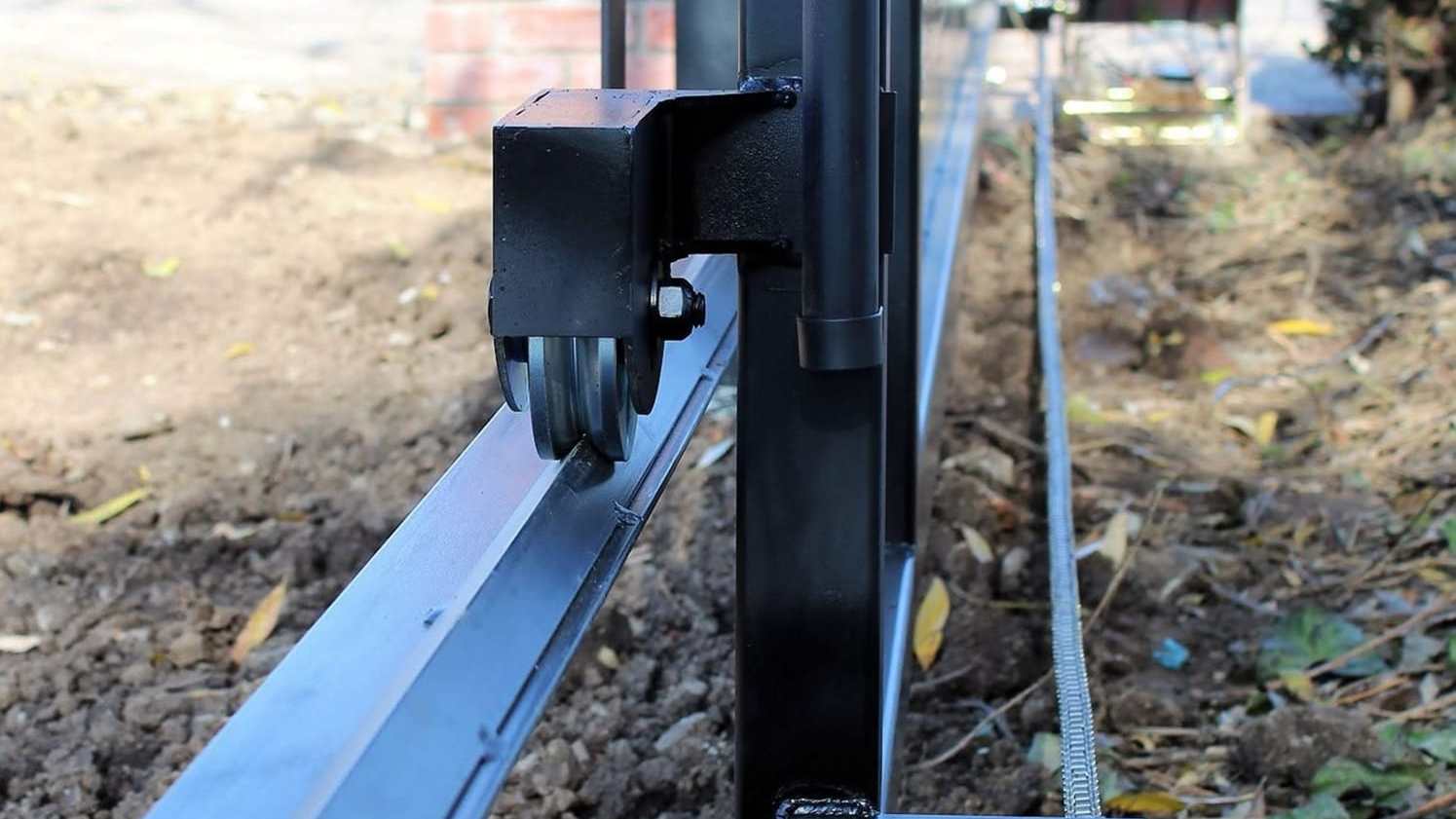
| Slide gate grinds, rolls hard or jumps the track | Worn V-groove wheels, a bent or packed track, loose guide rollers | New wheels, a straightened or replaced track, guides reset | Maintenance |
| Cantilever gate rubs or drops at the nose | Worn roller trucks, loose guide rollers or a bent frame | Repaired while the frame is straight; a twisted frame is replaced | Commercial |
| Bent frame or cracked weld | A vehicle strike, or years of slamming and operator strain | Local bends straightened and rewelded; a frame bent along its length is replaced | Installation |
| Gate stuck open or shut | Lost power, a tripped safety device, an operator fault or a jam | Depends on the cause; make the gate safe first | Stuck gate steps |
| Opener hums, stalls or reverses for no reason | A failing capacitor or gearbox, a binding gate, or limits out of adjustment | Repaired while parts exist; an operator without them is replaced | Gate openers |
| Remote or keypad does nothing, but the gate moves by hand | A flat remote battery, a receiver or keypad fault, or damaged low-voltage wiring | Fixed with batteries, reprogramming, a new receiver or a wiring repair | Access control |
If the gate won’t respond at all, a few owner checks in gate troubleshooting rule out a flat battery or a tripped breaker before anyone drives out.

Questions About Repair or Replacement
Is a sagging gate worth repairing?
Usually, if the frame is sound. Sag comes from worn hinges, a hinge post that has leaned or lifted, or a frame that has racked out of square. New hinges, a diagonal brace or a turnbuckle cable on a wood gate, or a post reset fixes most of it. Replacement makes sense when a wood frame has rotted at the joints or a steel one has rusted through.
Can a bent gate frame be straightened and rewelded?
A local bend from a bumper usually can. The damaged section is straightened or cut out, rewelded, ground smooth and recoated so rust doesn’t start at the repair. A frame twisted along its whole length rarely hangs true again, and aluminum is harder to weld in the field than steel. In those cases a new leaf on the existing posts is often the better job.
Should a heaved post be reset or replaced?
If the post is straight and solid, reset it: dig it out, pour a new footing below the frost line and rehang the gate. Replace it when the steel has rusted thin at ground level, the post is bent, or a wood post has rotted at grade. Either way, the latch, the stops and any operator need realigning afterward, because the gate now sits differently.
Is an old gate operator worth repairing?
Often, while parts are still made for it. Gearboxes, capacitors, control boards and limit switches can all be replaced. But an operator built before the current UL 325 rules may not support monitored photo eyes and edge sensors, and once parts dry up, every repair turns into a hunt. At that point a new opener is the safer choice.
Frost Heave, Road Salt and Ice

Frost-heaved posts. Wet Ohio clay freezes, swells and lifts any footing that stops above the frost line. The post leans a little more each winter, the latch stops lining up and the leaf starts to drag. The fix is a reset on a deeper footing.
Salt-corroded hinges and rollers. Plows and tires throw salty slush at the bottom of a gate all winter. It eats hinge pins, wheel bearings and the bottom rail, often from inside a tube where nobody sees it. Worn hardware gets replaced; rusted rail gets cut out, rewelded and recoated.
Ice-bound tracks. Slush packs into a slide gate’s V-track and freezes hard, so the wheels jump the track or the operator senses an obstruction and stops. Switch the operator off before you chip it clear. A cantilever gate has no ground track to freeze.
Winter damage shows in spring as sag, rust streaks and a rougher run. A look-over then, as part of gate maintenance, catches it before the hinge post or the operator pays for it.