
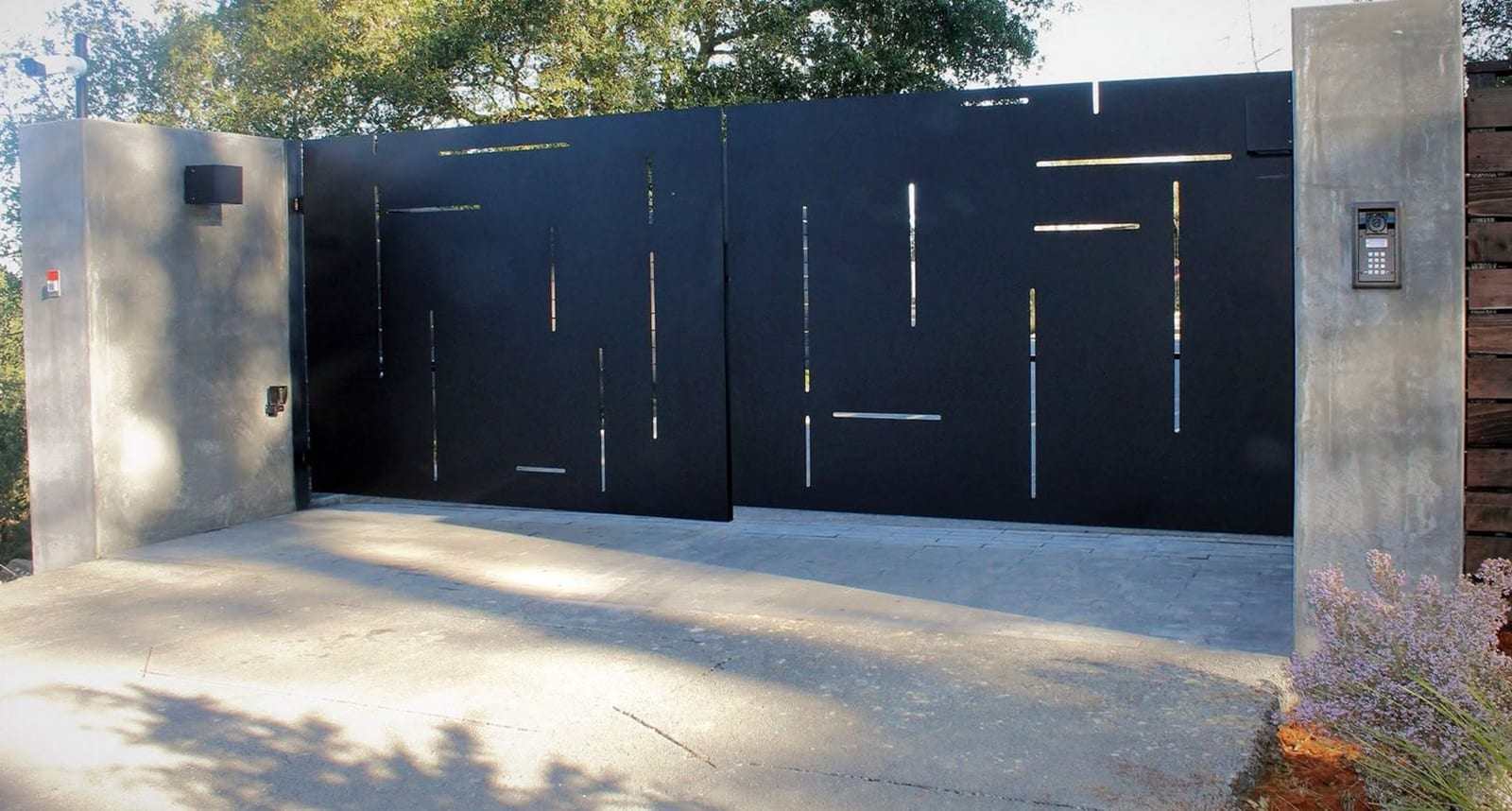
Gate Access Control in Columbus
We install and repair keypads, intercoms, card and fob readers and visitor-entry systems on gates, from a keypad on a driveway post to the call box, readers and walk-gate locks at an HOA entrance or an apartment community.
The entry device is only half the job: it has to work with the operator or the lock, stand up to the weather and make sense to a first-time guest.
How Residents and Guests Get In
Every method trades convenience against control, and many properties pair two: one for the people who live or work there, one for guests.
| Method | Best for | How guests enter | Limits |
|---|---|---|---|
| Keypad | Homes and small shared drives with a handful of regular users | You give them a code, ideally a temporary one that expires | Codes get passed around, worn buttons give away the digits, and a basic keypad keeps no log |
| Intercom | Homes set far back, and entries that take visitors and deliveries | They press call; you talk, or watch on video, and open the gate from a handset or phone | Someone has to answer, and it needs a wire or a reliable cell or Wi-Fi link |
| Card or fob reader | HOAs, apartments and offices with many regular users | Not on a reader alone: pair it with an intercom or keypad for visitors | Every card has to be issued, tracked and deleted when it goes missing |
| Smartphone app | Owners and managers who want to open from anywhere and send guest passes | You send a link or a timed digital key to their phone | Needs signal at the gate, usually a subscription, and a backup for guests without smartphones |
| License-plate reader | Gated communities and busy lots with steady regular traffic | Their plate is added for the visit, or they use the call box | Snow, dirt and bad angles cause misses, and Ohio no longer requires front plates, so the camera has to catch the rear plate |
Plan Your Entry System
Settle these before choosing hardware:
- Users. How many people need regular entry, and how often that list changes.
- Visitors. Who lets guests in, and from where: a handset in the house, a phone at work, a front desk.
- Deliveries. Parcel carriers, food delivery, trash and lawn crews. Give each a code or a schedule you can switch off.
- Emergency vehicles. How fire and police get through when no one answers.
- Wiring and network. Power at the gate, conduit to the house or office, and cell or Wi-Fi signal at the post. Any trench starts with an Ohio 811 call.
- Records. Whether you need a log of who came in and when.
With those answers in hand, book an appointment to plan the system around them.
Electric Locks for Walk Gates

Walk gates rarely get an operator; they get an electric lock and a closer. A magnetic lock pairs an electromagnet with a steel plate: it holds while powered and lets go when the keypad or reader cuts the current. An electric strike releases the latch instead, so the gate keeps its mechanical lock.
Either way, a hydraulic closer has to pull the gate shut every time, or the lock never catches. People leaving need a push button, a motion sensor or a lever on the inside.
Questions About Entry Systems
Can a keypad or reader be added to the gate I already have?
Usually. Most operators have an input that takes an open command from a keypad, reader or intercom, and older boards can often take one through an add-on receiver. Wired devices need a conduit run to the post; wireless keypads skip the trench but need batteries and a clear signal.
The operator should be sound first. Adding traffic to an operator that no longer reverses properly makes a bad problem worse, and a worn unit is better replaced as part of gate opener work.
What happens to keypads, readers and locks when the power goes out?
Without backup, keypads and readers go dark, and each lock does what it was set to do. A fail-safe lock, such as a magnetic lock, releases when power is lost and leaves the gate unlocked. A fail-secure lock, often an electric strike, stays locked from outside and opens with a key.
A small power supply with a battery keeps the access devices running through a short outage. Which way the locks fail depends on whether the gate is a required exit or a security barrier.
Can visitors at the gate call my cell phone?
Yes, with a cellular or Wi-Fi intercom. The call box at the gate rings your phone or an app; you talk to the visitor, then press a key to open the gate from wherever you are. Video models show you who’s there first.
Cellular units need a service plan and decent signal at the post; Wi-Fi units depend on the home network reaching the gate. A handset intercom wired to the house still suits anyone who wants no monthly plan.
Where should the keypad or call box go?
On the driver’s side, on a gooseneck post at car-window height, with a taller second head where trucks come through. Set it back so a waiting car sits clear of the gate’s swing or travel, with room to turn around.
Nobody using it should be able to reach the gate itself. Light it for evenings, and keep shrubs and snowbanks away from it.
Emergency Access for Fire and Police
At commercial and multi-family properties, responders can’t wait for someone to answer a call box. The usual ways they open a gate:
- Knox-style key switch. A keyed switch in a small steel box by the gate. The fire department’s key opens the gate and holds it open until someone resets it.
- Knox-style key box or padlock. A locked box holding a key, card or fob for responders, or a padlock on a manual gate, opened with the department’s key.
- Siren-activated sensor. A receiver that hears an approaching emergency vehicle’s siren and opens the gate with no key or code. It only works with the siren on, so it’s often paired with a key switch.
- Strobe or radio receivers. Some departments open gates from the truck with a strobe emitter or clicks on their radios, and the gate then needs the matching receiver.
Which of these a property needs is the local fire department’s call, and the approval side is covered under commercial and HOA gates.